Politics
Newcastle Candidates Split on Jobs, Services and Infrastructure as Local Election Race Sharpens
With polling day approaching, the candidates vying to lead Newcastle City Council are drawing clear lines on transport links, employment growth and the future of public services in the region.
How we reported this
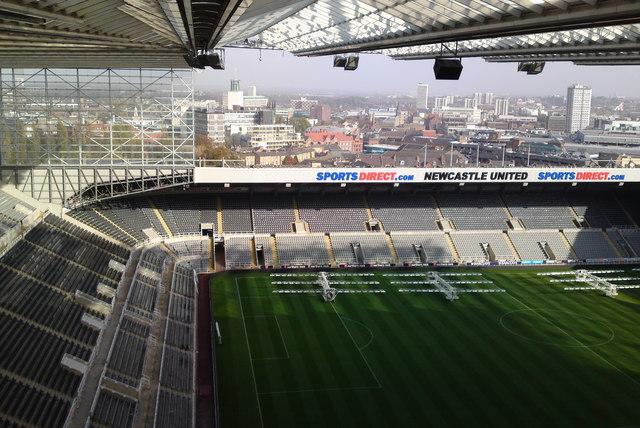
The race for Newcastle City Council is tightening around three policy questions that residents say matter most: where the jobs are coming from, whether local services can keep pace with a growing population, and which infrastructure projects actually get built. Candidates across the field have spent the past fortnight making pitches directly tied to those concerns, and the contrasts are sharpening ahead of the vote.
Newcastle's economy has been reshaping itself for years following the long decline of manufacturing employment in the Tyne corridor. The Tyne and Wear Combined Authority's 2024 economic strategy identified a shortfall of roughly 11,000 skilled jobs needed to close the productivity gap between Newcastle and the national average by 2030. That figure has become a reference point in the current campaign, with several candidates disputing both the diagnosis and the prescription. Policy analysts note that without sustained investment in skills and connectivity, post-industrial cities like Newcastle risk attracting office and logistics facilities that create low-wage work rather than the higher-value roles the strategy targets.
What Candidates Are Promising on Jobs and Transport
On employment, candidates broadly fall into two camps. One group is centred on expanding Newcastle Science Central, the 24-acre development site off Gallowgate that is expected to deliver around 4,000 jobs in digital and life sciences sectors once fully built out, according to the council's own projections. Proponents argue the city should accelerate planning permissions and prioritise graduate-retention schemes tied to Newcastle University and Northumbria University. A second group is pressing harder on traditional trades, pointing to the proposed Riverside East regeneration corridor and arguing that construction, green energy maintenance and port-adjacent logistics represent more immediate employment for residents who are not university-educated.
Transport is where the policy gap is most visible. The Metro system, operated by Nexus, is running on rolling stock that entered service in 1980. The replacement programme, funded partly through a 780-million-pound deal confirmed by the previous government's Integrated Rail Fund commitment, is now projected to deliver new carriages by 2027, though Nexus has flagged supply-chain risks that could push final delivery into 2028. Candidates who represent outer wards such as Denton Burn and Westerhope argue that any delay directly harms residents who rely on the Metro to reach employment in the city centre, given limited bus frequency on those corridors during off-peak hours.
Services, Housing and the Budget Squeeze
Newcastle City Council's 2025-26 budget set out savings of 23 million pounds, achieved through a combination of service efficiencies and a 4.99 percent council tax increase, the maximum permitted without a local referendum. That context is hovering over every campaign pledge. Candidates promising expanded children's centres, additional social care capacity or new leisure facilities are being pressed by opponents and local journalists to explain how those commitments reconcile with a council that has already cut 240 million pounds from its budget since 2010, according to figures cited in the council's own medium-term financial plan.
Housing is intertwined with both jobs and services. Newcastle's local plan targets 834 new homes per year, but completions between 2022 and 2024 averaged closer to 620 annually, according to planning monitoring data published by the council. Several candidates are calling for the council to use compulsory purchase powers more aggressively on brownfield sites along the Ouseburn Valley, while others argue the priority should be social rent housing given the 5,200-household figure on the city's waiting list as of March 2025.
Whatever the outcome on polling day, residents in wards from Byker to Fenham will be watching closely for movement on three deliverables: Metro carriage delivery dates, a confirmed planning decision on the Stephenson Quarter employment site and the annual council budget settlement expected from central government in December 2026. Candidates who win seats will face those tests within their first six months in office, and local advocates note that campaign commitments on jobs and services will be measured against those specific milestones rather than against broader aspirations.